
 Experts

 Health Queries

 Articles








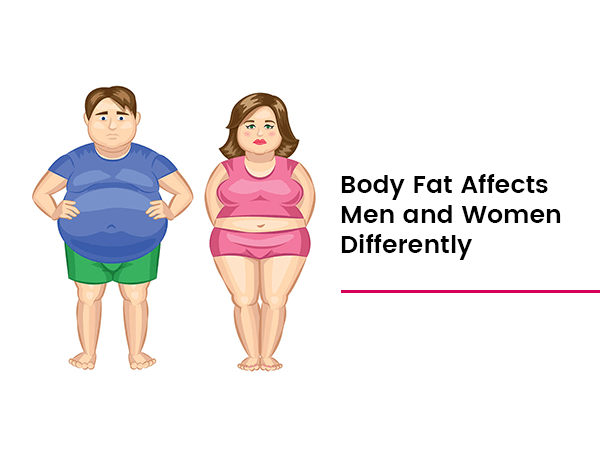
More and more adults in the Western world and now in India are obese, and the high-fat, high-carbohydrate diet and sedentary lifestyle might be to blame. However, men and women react differently to a high-fat diet. The role of the female hormone estrogen in accumulating fat, as well as the health consequences of being overweight in male versus female rodents were studied. It has been suggested that women tend to be lean when they are young but gain weight after menopause because estrogen helps them keep excessive weight at bay.
Ovaries are the main source of estradiol, which is a form of estrogen, in pre-menopausal females. So, the researchers wanted to test the protective role of ovary-produced estrogen by removing ovaries in female rodents.They fed the ovariectomized (surgical removal of one or both ovaries) females a high-fat diet and compared the effects with those of male mice that were fed the same diet.The scientists then examined the male rodents’ sperm count, the cycle of the estrogen in females, and the markers of metabolic syndrome and inflammation in both male and female rodents.
They summarized the findings, saying, “We found that the mice proceed to gain weight when fed a high-fat diet, suggesting that ovarian hormones are indeed protective against weight gain.”
“But we found, too, that these female mice exhibit neither neuro-inflammation, nor changes in reproductive hormones, suggesting that they are protected by factors other than ovarian estrogen. This is a novel finding.”

However, the health consequences of carrying excess body weight do not stop here. Obese men have lower testosterone levels, contributing to low libido, low energy, and reduced muscle strength. They showed nearly 50 percent decreases in sperm number.
On the other hand, obese women have difficulty with their menstrual cycles. They don’t ovulate. Decrease in the fertility is also seen, especially if these women are facing hormonal disturbances.
However, the research also suggests that women are more protected against the harmful effects of being overweight, a phenomenon that may have a lot to do with women’s body shape and their body fat distribution.
The results agree that males have larger visceral fat depots. Also, the results seem to confirm that pre-menopausal women tend to deposit fat subcutaneously, or under the skin. Accumulating fat around the abdomen leads to the “apple-shaped” body, while the fat that gathers around the hips leads to the “pear-shaped” body. Women are likely to develop the latter, and men the former.
Visceral, or abdominal, fat can reach and affect internal organs.
Additionally, this type of fat gets more inflamed with a fat overburden. This fat then recruits immune cells from blood circulation that get activated. Previous studies have shown that neuro-inflammation is a side effect of obesity, but this study specifically found that in male mice, macrophages – which are a large type of immune cell – penetrated the blood-brain barrier and reached the brain.
The brain has been considered an ‘immune protected site,’ but we show that peripheral inflammation ‘spills over’ into the brain, which, in turn, may cause neuronal problems. However, the authors cannot yet fully grasp the mechanisms that are behind this obesity-induced neuro-inflammation, and they do not know why women are protected against it. So, future studies will be required.
While overweight, women are more protected than men where neuro-inflammation is concerned. This could be an evolutionary protection for women, who need to experience more change in weight due to pregnancy.
 likes
likes comments

 Ask a Query
 Favourite
 100% Anonymous. Your identity
 Instagram
 YouTube
 Go to Query
 Retry Payment
,