
 Experts

 Health Queries

 Articles








 Stress is synonymous to living in this world that we inhabit in, today. The rush of our daily lives serves as a great example in how stress has become second nature. We wake up to a blaring alarm, we force feed our children while we rush out with a fruit or sometimes nothing, we buy something at work that we can eat during a “working lunch” and then there is that evening time snacking where we binge on what’s around and if you are anything like me a night time meal is the only grand meal you can get to eat, it is the only meal where you have time to eat with considerable relish, while watching TV.
In the midst of this busy life anything can trigger a completely untoward reaction from us – heavy traffic, a noisy neighbor, a talkative toddler, an overpowering boss or a spouse who wants more from the marriage than just feeling like they are roommates in this relationship. All these situations are called Stressors, these are situations where we find ourselves overreacting.
Stress on the other hand, is defined very broadly as an automatic physical response to anything that requires you to accommodate to a change. So whether it is a sudden screeching of breaks in the road, or a loud and painful argument, or that persistent and constant ache in the lower back, each real or perceived threat to our body kick starts a plethora of bodily changes. Most important to our conversation here is the presence of Cortisol, a hormone in the bloodstream that makes us hungry and also leads our body to store more fat when we are especially stressed.
Many of us have a good measure of healthy responses to stress. We may call a friend, cook a healthy and nourishing meal or get to bed earlier than usual. However, this typically doesn’t last and we resort to unhealthy behaviours as a way to relieve pressure we experience.
Some of these ways may be:
- Obsessively being on the phone/internet for hours together
- Overeating, leading to weight gain
- Under eating or weight loss
- Too much/too little sleeping
- Drinking too much alcohol
- Withdrawing from friends or partners or on the other hand going out to a lot of parties in order to avoid facing problems
- Using drugs
- Self-medication
- Lashing out at others emotionally or physically
It is important to acknowledge how one handles stress in order to stop and make healthy choices instead. For instance, when stressed we may opt for a sugary snack, however if we are aware of this pattern, we can call a friend instead. Choosing to connect rather than eat can help alleviate stress and what’s more? Studies show that improving social relationships can increase health benefits – with no calories!
Easy tips to release stress:
In today’s world, the kind of stress that is hardest to deal with is chronic stress. Not only do people living with chronic stress acknowledge that they are stressed, they also feel there is nothing one can do about it.
Begin in a 10 year long marriage that has had several pressures for the woman from taking care of the household, to losing her career identity, to gaining immense amount of weight and dealing with difficult marriage is one of the most common chronic stressors in our Indian homes.
As women we live in these situations every day, gritting our teeth, waiting for relief and getting a splatter of quiet here and there that we have slowly found ourselves resigning to this situation, reacting poorly and treating our bodies poorly. This kind of chronic stress can lead to weight gain and women who desire to lose weight also experience that they are unable to lose weight. Some of the most common forms of chronic stress can be financial stress, marital distress, divorce, death of a spouse, care giving stress and work related stress. Recognizing that we are stressed is the first step in working on releasing it and allowing the body to eventually lose weight too.
Here are some simple tools to release stress.
Stress Release when you don’t have enough time:
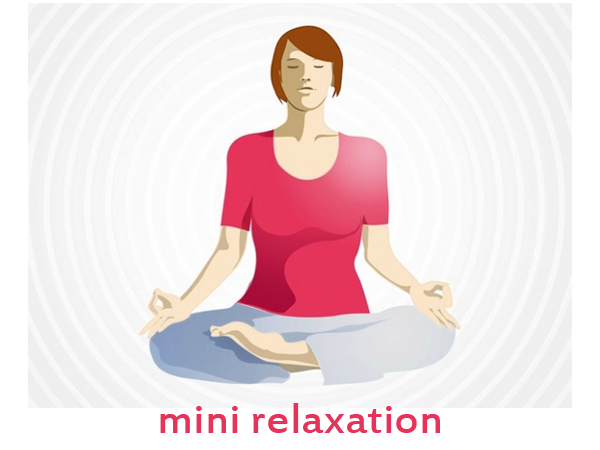
1. Try Mini-Relaxation
a) When you just have 1 minute: Take a deep breath in and feel the breath going down to your belly and your belly extends out. Take a deep breath out so that that you are gently blowing out your breath from your mouth, as if you were blowing out the candle. Now the second time around as you take a deep breath in say to yourself “I am” and as you breathe out say to yourself “at peace”. Continue this for three times or more and allow yourself to feel relaxed.
b) When you have 3 minutes: Take a break from everything you are doing and just take three breaths out like in the previous example (a), then gently bring attention to your body and ease all the tension in the body as you take more deep breathes. Relax your jaws, shoulders, lower back, and entire trunk of the body, calves, and feel. Just feel your body literally sink into your chair and your thighs, calves become heavier as your feel grow firm roots into the floor. Just breathe in and out consciously for the next few seconds.
c) When you have 5 minutes: Try self-massage. A combination of strokes and gentle chops and tapping with fingers or cupped palm help in releasing tension. Start by kneading your neck and shoulder muscles, use your thumb to make tiny circles around the base of your skull, gently tap all over your scalp with your fingertips, and make tiny circles with your fingertips on your face. Finally cup your hangs over your face and breathe deeply and gently for a few minutes.
2 . Stop.Breathe.Reflect.Chose: Consciously declare a time out for your brain when you feel overly pessimistic, upset by conflicts with others, angry or irritated or overextended. Take a few deep breaths to release that accumulating tension and ask yourself some difficult questions like: Is this thought or belief true? Did I jump to a conclusion? What evidence do I really have? Am I being overly negative? Is there any other way to think about this situation? Once you ask yourself these difficult questions choose to act in a way that reduces your stress and get to the root of the problem. Try mini relaxation techniques frequently when you feel that the problem is not going away and that you need to learn to live with it.
3 . Keep a gratitude journal: Research suggests that gratitude enhances happiness (and reduces stress). Personally, I have found that when I intentionally practice gratitude for my days, for my family and for difficult situations, I am able to focus on the reality of the situation, that it has both positives and negatives and that where I am right now is not as bad as my brain makes it out to be. Keep a gratitude diary and write 3 things that you are grateful for your day. Write for a week and you will start to see how it eases stress and infuses the kind of happiness you need to allow your brain to reduce cortisol levels and then lose weight too!
4 . Start Self-Care: When you feel close to burn out or feel worn out it is a signal to start taking care of your body. The stresses of our lives not only lead us to store fat but the tension of not losing weight only add to this kind of chronic daily life stress. Instead of focusing (obsessively) on weight loss start to think of yourself as caring for yourself. Dress up – so that you feel beautiful, get good massages to release physical stress, visit a parlor to indulge in some self-care, start caring for yourself in a way that lets your body know that you are not wound up about life in general and about weight loss. This acts as a positive signal to the brain to reduce hormones in your body that leads to weight gain.
5. Eat Mindfully: Make eating a pleasurable activity. Not one that needs to be done and over with. The act of eating is an act of nurturing yourself. When you can stop and really sit with your food, you not only pay attention to how much you are eating but you are also paying attention to your body’s signal that it is full. Eating slowly, savoring at least one meal in your day acts as a trigger for the body to begin to relax even during the day further allowing you to pay attention to how you eat, how much you eat and how you feel about your food.
An optimal amount of stress is necessary in our daily lives for us to work effectively. However, what tips the meter to the side of chronic stress is unique to an individual. When you are aware of how you react to stress you can begin the journey of taking control of how you react and how you take care of your body.
So how do you react to stress and what stress management and relief techniques are you willing to schedule into your everyday life from here onwards?
 likes
likes comments

 Ask a Query
 Favourite
 100% Anonymous. Your identity
 Instagram
 YouTube
 Go to Query
 Retry Payment
,